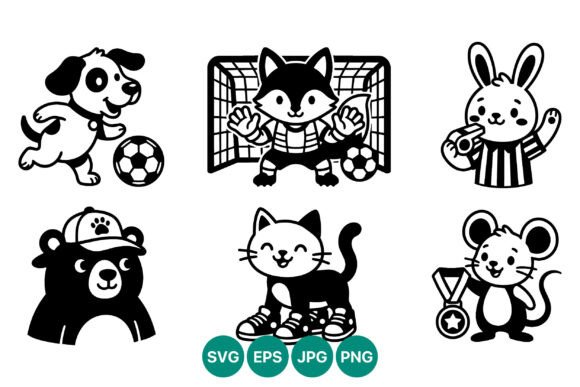
Cute Cartoon Animals Playing Soccer
I see a lot of embroidery designs that promise a whimsical feel, but few actually deliver the kind of warmth and motion I want when I’m planning a project for a small shop order or a custom gift. Cute Cartoon Animals Playing Soccer caught my attention because it’s not just a static lineup of faces—it’s a whole little story unfolding across the fabric. As a designer who regularly tests graphics for real embroidery use, I immediately began picturing how this black-and-white illustration would behave once it’s converted into stitches, how each character holds up on a sweatshirt or a tote bag, and whether the overall mood translates into a product people actually want to buy.
First Impressions: A Playful Team in Black and White
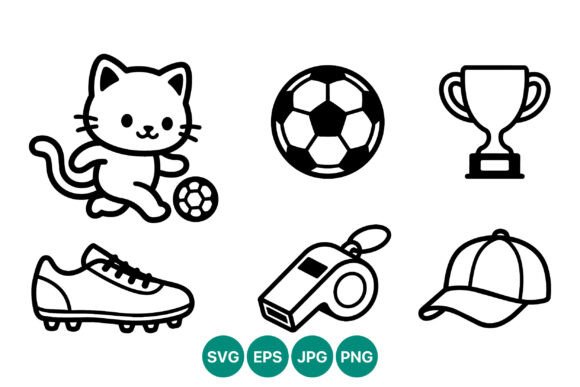
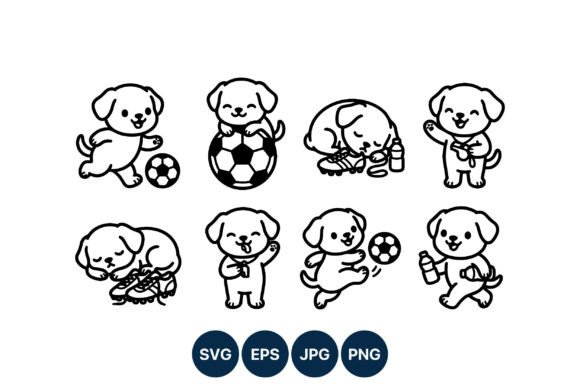
Opening the file, I was met with a charming monochrome scene that feels like a page from a vintage children’s sports book. The design isn’t fussy or overloaded with shading. Instead, it leans into clean, expressive linework and recognizable silhouettes. You immediately spot a dog mid-kick, a fox diving for a save, a cat in sneakers, a striped referee bunny, a bear with a cap, and a tiny mouse proudly holding a medal. The black-and-white nature means you’re not locked into a preset color palette—this is a huge advantage for an embroidery designer. You can keep it as a crisp single-color stitch, or you can use it as a base for appliqué, or even add your own thread colors to make each character pop. The mood is energetic, a little funny, and very approachable, which is exactly what sells on kids’ products and whimsical handmade gifts.
The Animal Squad: Who Shines in Stitches?
When I evaluate a multi-character design, I go through each element and imagine how it will read at different sizes. The more intricate a tiny detail, the more likely it will become a blob if the stitch count isn’t handled right. Here’s how the individual players feel to me:
The Dog and the Action
The dog is the focal point—leg extended, soccer ball right at the foot. The motion is clear, and the ball itself is a simple circle with a few interior lines. This is a relief because a heavily patterned ball would be a nightmare in a small hoop. The dog’s ears and tail add just enough detail to make it recognizable without being overly dense. I’d feel confident using this as a standalone element on a cap or a patch.
The Fox as Goalkeeper
The fox’s posture—leaning, paws out—reads well. The tail provides a nice sweeping curve that balances the composition nicely. In embroidery, that tail could be filled with a subtle satin stitch direction change to give it texture, but even as a simple black fill, it works. The fox’s face is simple: pointed ears, little nose, no tiny eyes that would close up.
The Cat, the Bunny, and the Bear
The cat in sneakers is a delightful touch. The sneakers are drawn with a few strokes, so they won’t turn into a heavy block of stitches. The striped referee bunny is my personal favorite. The stripes are thin but not microscopic, so at a reasonable size—say, 4 inches wide—they should stitch out crisply. The bear with a cap brings a nonchalant, cool-kid energy that balances the more active poses. All three read as distinct silhouettes, which is essential for a design that’s likely to be printed or stitched in a single color.
The Mouse with the Medal
The mouse is small, holding a medal aloft. This is the one area where I’d be cautious. If the design is scaled down too much, the medal’s ribbon and the mouse’s tiny paws might merge. For anything below a 3-inch hoop, I’d consider simplifying that part or using it as a decorative accent rather than a focal point. Still, the idea is adorable and rounds out the story beautifully.
Where This Design Truly Belongs in Your Embroidery Lineup
I’m always thinking about what a design will actually become—what product it will live on, who will open the package, and whether they’ll smile. Cute Cartoon Animals Playing Soccer has a natural home on a few specific types of projects.
Tote Bags and Everyday Fun
Imagine a natural canvas tote, slightly slouchy, with this design stitched in dark charcoal thread right on the front. It’s an instant gift for a soccer coach, a team mom, or a kid who lives for Saturday morning games. The black-and-white palette keeps it sophisticated enough that an adult would carry it, but the characters keep it playful. I’d pair it with a sturdy cutaway stabilizer because tote bags take a beating, and the stitches need to stay sharp through wash after wash.
Kids’ Apparel and Sports-Themed Gifts
A sweatshirt with this design across the chest feels like a boutique item. I recently had a customer ask for a personalized birthday present for her six-year-old nephew who loves soccer. This design would have been perfect. On a soft cotton-blend sweatshirt, I’d use a medium-weight tear-away stabilizer and a satin stitch outline to keep the edges clean. The design also works on baby onesies, but I’d enlarge just one or two characters—maybe the dog and the mouse—to avoid overwhelming the tiny garment. The full scene looks best on a youth-sized tee or a hoodie where you have enough real estate.
Patches and Small Accessories
Because the characters are distinct, you can pull individual animals out to create a set of embroidered patches. The fox as goalkeeper makes a great iron-on patch for a denim jacket. The rabbit referee could be stitched onto a cap. For patches, I’d digitize with a dense fill stitch and a merrow-style border, but the original illustration gives you a perfect roadmap. Even as a set of small hoop art pieces framed in mini embroidery hoops, this could be a cute nursery decor set.
When to Be Cautious with This Design
No design is universal, and I’ve learned the hard way that ignoring the limitations of a graphic leads to frustration. Here’s where I’d pause and test carefully before committing to a large run.
Small Hoop Sizes and Fine Details
If your machine can only handle a 4x4 inch hoop, the full scene might feel cramped. The mouse’s medal, the cat’s sneakers, and the bunny’s stripes could lose clarity. I’d either enlarge the design to a 5x7 or 6x10 hoop, or isolate one or two characters for a smaller project. Always do a stitch-out on scrap fabric before putting it on a final product, especially if you’re selling to a customer who expects crisp definition.
Fabric Texture and Stability
On a highly textured fabric like a thick terry cloth towel, those thin black lines might sink into the nap and look jagged. I’d stick to smooth, tightly woven fabrics—cotton poplin, linen blends, canvas, or high-quality jersey. Stretchy fabrics like performance tees need a good cut-away stabilizer and possibly a topping to keep the stitches from distorting. If you’re doing a curved surface like a cap, the design’s wide horizontal layout might need to be adjusted so the characters don’t wrap around the side seams awkwardly. Test on a cap frame first.
Dark Fabrics and Contrast
Since the design is black and white, you have to think about the fabric color. On a navy or black garment, white thread will pop, but the black areas might disappear unless you use a dark gray thread for the linework instead of true black. On a white or light fabric, black thread is striking. I’d test a few thread color combinations: white on dark fabric, black on natural fabric, or even a tonal version with a soft gray on a heather gray sweatshirt. That monochrome flexibility is a strength, but it requires a little planning.
How It Elevates Your Handmade Products
When I’m building a product line, I choose designs that do more than just look cute. They need to tell a story that makes someone click “add to cart” or pick up the item at a craft fair. Cute Cartoon Animals Playing Soccer has that story baked in. It’s not just a dog; it’s a dog in mid-kick with a fox diving to save the goal. That narrative gives you something to talk about in your Etsy listing description or your Instagram caption. Customers connect with the teamwork theme, the sportsmanship, the little mouse celebrating with a medal. This emotional hook can elevate a simple tote bag into a meaningful gift.
From a brand consistency standpoint, the black-and-white line art style is easy to pair with other designs. If you already sell animal-themed embroidery, this fits right in. It also photographs beautifully for product mockups. You can display it on a light background with a single bloom of color—maybe a bright orange thread accent on the soccer ball—and it instantly looks like a premium handmade item. Professionalism in embroidery often comes down to the details: a clean stitch-out, no puckering, and a design that reads clearly at a glance. This one checks those boxes.
Practical Embroidery Notes Before You Start
I never start a client project without running through a mental checklist. Here’s what I’d do if I were about to use Cute Cartoon Animals Playing Soccer in a real embroidery job.
Test Stitch on Scrap Fabric
Always, always test. I’d pick a fabric similar to the final product, hoop it with the same stabilizer, and run the design. Watch for thread breaks, dense areas that cause the needle to struggle, and any small details that get lost. The mouse’s medal and the cat’s sneakers are the first places I’d examine under a magnifying glass. If they’re not stitching cleanly, I might adjust the digitizing slightly or increase the size by 10%.
Thread Color, Density, and Stabilizer
Even though the design is black and white, the thread choice matters. A shiny polyester thread will give a different look than a matte cotton thread. I’d probably use a 60-weight thread for the fine details to keep them crisp. Satin stitch for the outlines, fill stitch for larger areas like the bear’s body, and a running stitch for the tiniest lines. The stitch density should be optimized for the fabric—around 0.4 mm spacing for the fill on a sturdy bag, but a bit looser on a soft knit to avoid stiffness. For stabilizer, a medium-weight cutaway is my go-to for apparel; a tear-away might work for a decorative patch that won’t be washed frequently. If the fabric is stretchy, a fusible stabilizer can prevent shifting.
Check the Download Contents and Licensing
The product description says “Download includes” but doesn’t list the file formats, so I’d confirm with the seller whether you’re getting a pre-digitized embroidery file (like PES, DST, JEF) or a vector graphic (AI, SVG, EPS) that you’ll need to digitize yourself. If it’s an illustration file, you’ll need embroidery digitizing software and the skill to convert it. The product category is “Illustrations” and type “Graphics,” so it’s likely a graphic file meant for you to digitize. That’s not a problem for an experienced digitizer, but if you’re new to embroidery, you might need to hire a digitizer. Also, check the license: can you use it on products you sell? Is commercial use allowed? Can you sell finished items with this design? You don’t want to invest time in a project only to find out there’s a restriction. I always verify these details before listing anything in my shop.
A Designer’s Final Verdict on Cute Cartoon Animals Playing Soccer
After mentally running this design through a dozen different product scenarios, I’m impressed by its versatility and emotional charm. It’s not a hyper-detailed, multi-color illustration that demands an elaborate digitizing setup. It’s a thoughtful, well-composed black-and-white cartoon that gives you freedom to interpret it in thread. The character lineup is balanced, the soccer theme is broad enough to appeal to boys and girls, and the mix of action and whimsy suits a wide age range.
If I were preparing a custom embroidered tote bag for a little soccer fan’s birthday, I’d reach for this design without hesitation. I’d stitch it in a warm charcoal thread on a natural canvas, add the child’s name in a small script below the mouse, and package it with a handwritten note. I’d feel confident that the stitches would hold up, the design would read clearly, and the end product would look like something from a small boutique rather than a mass-produced item. For Etsy sellers, craft fair vendors, or anyone building a handmade brand around joyful, sports-themed products, Cute Cartoon Animals Playing Soccer is a smart addition to your design library. Just remember to test your file, choose your fabric wisely, and respect the license—and you’ll create something that makes people smile before they even open the package.